
In 2026, an AI-driven era where most content is generated by AI tools such as ChatGPT, Gemini, and Claude, a new challenge called AI slop has emerged. Whether it’s texts, images, videos, movies, or even music, everything can be generated quickly. That quickly generated, low-quality, vague content, lacking the EEAT concept, and that can be misleading, is called “AI Slop.”
If you want to learn about AI Slop, then this blog post is for you. It will highlight what AI slop is, why it is increasing, its impact, how to identify it, and how to avoid it. This blog will mention everything you need to know about AI slop. Read on to know more.
What Does “AI Slop” Mean?
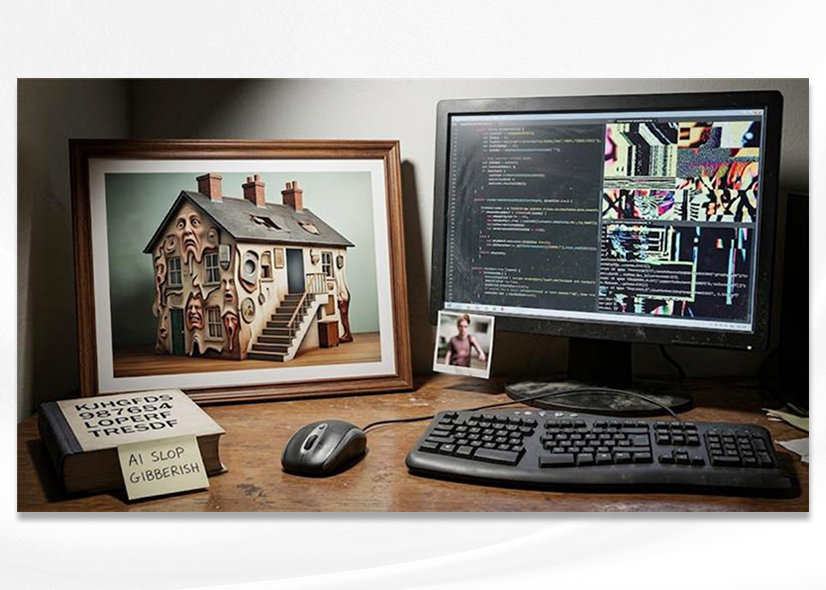
In simple words, AI slop is low-effort, digitally generated, low-quality content that is mass-produced with the help of artificial intelligence. AI-generated, low-quality content feels like “slop” without any human insights. It often comes with inaccurate information that must not be used without verifying it. Tools like ChatGPT, Gemini, and Claude have made content creation easier. Whether it’s in textual form or any creative form.
Also Read: What Are The Top AI Marketing Tools For 2025?
Examples of AI Slop
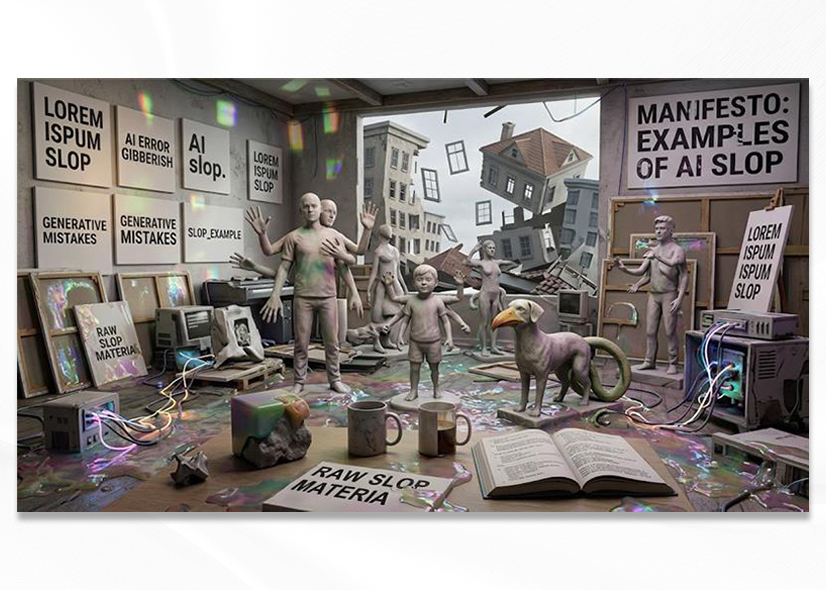
If you have followed the news or the latest trends, you might be aware that these use manipulative imagery, fake viral stories, and AI-generated political deepfakes that can increase engagement on their page.
- Images of politicians to create a buzz and increase engagement.
- Fake news or documentaries presented as real to evoke emotions and gain user attention.
- Rewrote duplicate articles copied from ChatGPT and posted.
- Keyword-stuffed blogs that add no value but are only stuffed with keywords, without any sense, just to make them rank.
Why is AI Slop Increasing Online?
With the rise of AI tools like ChatGPT and Midjourney, people have access to use them freely. They can create content in large quantities without thinking about its credibility, authenticity, and truthfulness. And the reason behind it?
- Creating a buzz around profit and increasing engagement. It has dominated the social media algorithm, as it exploits user attention.
- It is incredibly cheap and fast. With the technology this strong, people can easily bring their imagination to life using these tools.
With millions of people relying on AI to generate content without thinking about the quality, the percentage of users who rely on thoughtful creation is relatively lower than others. The internet is filled with repetitive, low-quality, mass-produced content that doesn’t add any value but is only for engagement.
How AI Slop Impacts SEO and Search Rankings
Google evaluates content based on its E-E-A-T (Experience, Expertise, Authoritativeness, Trustworthiness) standards. If the content posted on webpages does not match Google’s standards, then it leads to low rankings, reduced organic traffic, and loss of user trust. Google penalizes spammy, vague, and unhelpful content generated by AI.
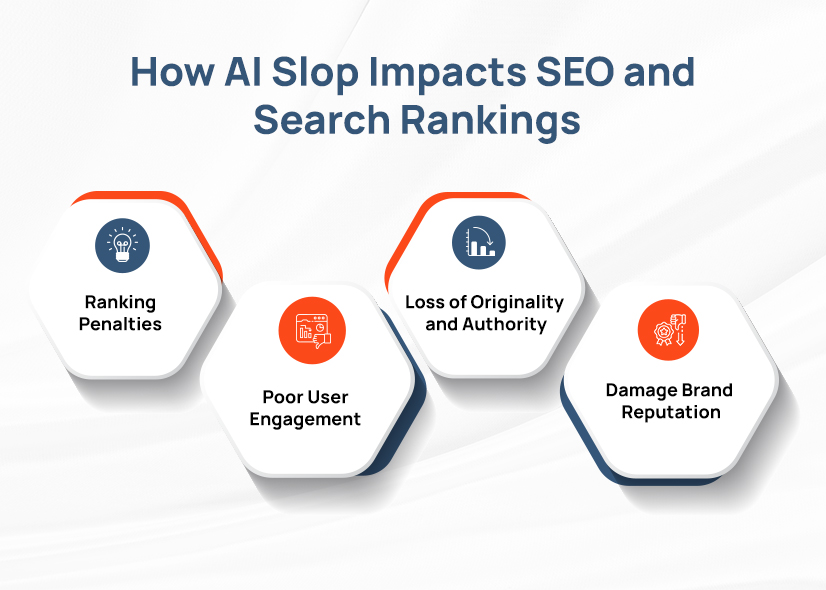
Here is How AI Slop Impacts SEO and Search Engine Rankings:
Ranking Penalties
Search engines like Google have clearly stated that they prioritize helpful, original, and E-E-A-T content. But AI slop lacks all the requirements, so if you are posting sloppy content, it can lead to a penalty.
It is not a direct penalty; however, the content that fails to meet EEAT standards may struggle to rank or gradually lose its position in search results.
Poor User Engagement
If you are posting low-quality, AI-generated content that’s vague, generic, and not helpful at all, this might result in:
- Increased bounce rates
- Less time on the page
- Fewer interactions
When users don’t find what they are searching for, they tend to leave the website quickly. Search engines often interpret this behaviour as a negative signal and can affect your ranking over time.
Loss of Originality and Authority
How do you think AI tools fetch data? From pre-existing content pieces! AI slop is when pre-existing rewritten information is shared without adding new insights or perspectives. It lacks originality and can make it challenging to rank your website in search results.
Damage Brand Reputation
Sloppy content is often of low quality, misleading, and inaccurate, which can harm your brand’s credibility. Unreliable and irrelevant content can associate your website with spam, reducing trust and discouraging repeated visits.
In the long-term, this will not only impact SEO performance but also conversions, customer loyalty, and overall brand perception.
How to Identify AI Slop (Red Flags)
Understanding sloppy content is crucial not just to maintain content quality but also to protect your website. Here is how to detect AI slop:
- Em dashes (—) without space are often a distinctive AI sign.
- Thin content AI often seems polished but is vague. It does not provide any good information, no real insights, examples, or actionable advice.
- One of the biggest red flags in sloppy content is repetition. It often has the same points, phrases, sentence structure, and more, just with minimal variations.
- Overusage of buzzwords such as “delve,” “elevate,” “empower,” “game-changer,” “ever-evolving,” “emerging,” “in the realm of,” and many other words.
- Paragraphs are used with a similar tone, length, and lack of empathy to the uneven rhythm of human writing.
In visual content, look for:
- Extra toes and fingers, distorted limbs, or objects that defy physics.
- Lip-syncing that doesn’t quite match the audio.
- Plastic-like or smooth textures on faces and clothing.
- Blurry or nonsensical text on signs and buildings.
Is All AI Content Bad? (Myths vs Reality)
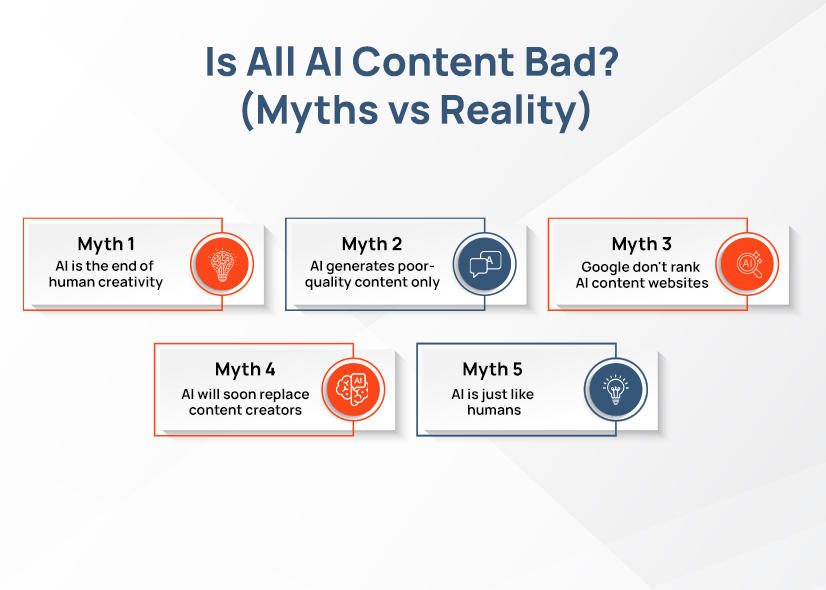
In short, the answer is no! Not all AI content is bad or harmful. AI tools are great assistants when it comes to boosting productivity and creativity.
While there is a topic trending everywhere: “AI Slop.” Yes, it does generate low-quality, biased, and inaccurate content, but on the other hand, it can create highly valuable, insightful, and well-structured content that can guide human expertise.
Myth 1: AI is the end of human creativity
No, the reality is totally different. AI is like an assistant or a partner that can help writers overcome writer’s block and enhance output, but it cannot end human creativity. Human instructions are required to make it authentic and original.
Myth 2: AI generates poor-quality content only
The quality of the content is highly dependent on prompting and human editing. If you are inputting a high-quality prompt, you will get a high-quality output only.
Myth 3: Google doesn’t rank AI content websites
This is a myth, because Google’s helpful content update mentioned that they look for content that’s high-quality and helpful and if it follows the E-E-A-T concept. It doesn’t matter where you got the content produced.
Myth 4: AI will soon replace content creators
AI is like an assistant that helps in automating the routine tasks, freeing humans so they can focus on strategies, storytelling, and finally, high-value editing.
Myth 5: AI is just like humans
AI is a tool that recognizes patterns based on stats and not consciousness. It can never be like a human, as it lacks understanding, emotions, and common sense.
When is AI bad or harmful?
AI can be really problematic when it:
- Hallucinate
- Provide biased content
- Lack of depth
How to Avoid Creating AI Slop Content
Sloppy content can be harmful to your website. You need to avoid it in the following ways:
Add Human Insights
When using AI to get assistance for your AI content SEO, make sure not to copy and paste it. Make additional changes in it by improving its tone. Make sure to add human insights and real experience. Making changes in it will give it a human touch, showcasing expertise.
Fact-Check
Make sure to check the facts provided by the AI tools. AI can hallucinate, so make sure to verify the information before posting it on your website. Edit the output to ensure it is correct.
Focus on User Intent
When prompting the AI tools to get assistance, make sure to add user intent carefully. This will ensure you get the correct output that’s accurate.
Improve Readability and Structure
AI tools won’t generate content that’s highly readable and structured for SEO. You need to optimize the content yourself to ensure it’s readable.
Future of AI Content: Will AI Slop Be Eliminated?
This rapid increase in AI-generated content has changed the way digital marketing works but has also created the problem of “AI slop.” But now the biggest question is, will it disappear? After avoiding sloppy content and using EEAT standards, will it be eliminated?
Smarter Algorithms Are Raising the Bar
Search engines like Google are continuously improving their algorithms to prioritize high-quality, helpful content. Updates are increasingly focused on identifying:
- Thin or low-value pages
- Repetitive or unoriginal content
- Lack of E-E-A-T signals
This means AI slop is becoming easier to detect and less likely to rank.
Better AI Models, But Not a Complete Solution
AI tools themselves are evolving rapidly. Newer models are more context-aware, accurate, and capable of producing human-like content.
However, even the most advanced AI still depends on how it’s used. Without proper guidance, editing, and strategy, it can still generate generic or misleading content. In other words, better tools don’t automatically eliminate bad outcomes.
The Shift Toward Quality-First Content
The future of AI content lies in human-AI collaboration, not full automation. Brands that succeed will:
- Use AI for efficiency, not replacement
- Add human insights, expertise, and originality
- Focus on solving real user problems
AI slop won’t completely disappear, but it will become less effective. As search engines evolve, quality-first content will always win, regardless of how it’s created.
Avoid AI Slop & Rank Higher with SEO Toronto Experts
Creating content is easy; creating content that ranks is not. That’s where the right strategy makes all the difference.
Turn AI Into a Competitive Advantage
Instead of relying on raw AI output, we help transform it into high-performing, SEO-optimized content. Our approach ensures every piece is:
- Aligned with search intent
- Backed by keyword strategy
- Enhanced with human expertise and brand voice
Data-Driven Content Strategy with SEO Optimization
We don’t just create content; we build scalable SEO systems. From keyword clustering to on-page optimization, every step is designed to improve visibility and rankings. By combining AI efficiency with proven SEO frameworks, we ensure your content stands out, not blends in.
At SEO Toronto Experts, we help businesses create high-quality, human-expertise content that aligns with search engine guidelines and drives real traffic to your website.



