
SEO for e-commerce is the perfect way and the ideal solution to rank your product and category pages while increasing your sales. It helps in enhancing the visibility of your website on search engine pages and even helps you reach your customers easily. It helps in reaching your target audience.
In SEO, boosting online store rankings is all about leveraging SEO techniques. However, this is not an instant process, and you can’t get results in a day or two. It requires a proper SEO checklist to ensure you rank well on search engine pages.
Why E-commerce SEO Is Essential for Online Store Growth

E-commerce SEO is essential for online store growth. It helps in enhancing the organic traffic value and even increases the sales of the e-commerce website. By enhancing your website’s SEO, you can maintain a long-term position in search engine pages while getting a high return on investment.
An e-commerce website often struggles with duplicate product pages, faceted navigation issues, out-of-stock pages, thin content, and poor internal linking. However, Search Engine Optimization (SEO) can help you address all these challenges.
E-commerce SEO Checklist for Higher Rankings and More Traffic
Start With Comprehensive Keyword Research
The first step for higher rankings and more traffic is to start with keyword research. Make sure to find keywords that have meaningful search volume. You can use tools like:
- Ahrefs
- Google Keyword Planner
- Semrush
- Google Search Console
Find transactional and commercial keywords to optimize them according to the product, category, and long-term buying phrases to increase your rankings.
Build an SEO-Friendly E-commerce Site Structure
An SEO-friendly website is one that doesn’t bounce back users or frustrates them. A good SEO-friendly website is one that is crawlable, easy to navigate, faster in loading speed, and creates a logical hierarchy in the categories. The site structure should be optimal to ensure it can rank well in the search engine pages.
Optimize Product Pages for Search Engines and Conversions
Optimizing product pages is essential. You must put your keywords in the title, H1, URL, and even meta description. Make sure to add product schema markup for rich snippets and write unique descriptions on your own.
Here are the items you must optimize on your website:
- Unique product titles
- SEO-friendly URLs
- Keyword-rich meta descriptions
- Detailed product descriptions
- High-quality images with alt text
- Customer reviews
- FAQs on product pages
Create High-Converting Category Pages
Many e-commerce businesses focus on product pages only and tend to ignore category pages. This is a missed opportunity! Because category pages often rank for high-volume keywords. A category page is not just about displaying products but also has useful introductory content that helps both users and search engines understand the page topic. For example, a winter category page could include the following:
- Types of winter jackets
- Insulation differences
- Weather recommendations
- Styling tips
Improve E-commerce Technical SEO Performance
In e-commerce websites, especially large stores, technical SEO is the biggest ranking factor and plays a crucial role. Even the best content might fail if your website’s technical SEO isn’t strong. Make sure to:
- Increase Website Speed and Core Web Vitals
- Ensure Mobile-Friendly Shopping Experience
- Fix Crawlability and Indexing Issues
- Secure Your Store With HTTPS
Use Schema Markup for Rich Results
Schema markup helps the search engines better understand your website’s content. If you have an e-commerce website, a product scheme is especially useful because it can display product pages, availability, star ratings, and even reviews. When these search results improve, it often enhances click-through rates.
Strengthen Internal Linking
It is crucial to strengthen the internal linking for your website. This is an important opportunity that you must overlook as an e-commerce SEO strategy. Strong interlinking is crucial as it helps in improving crawling, distributing page authority, increasing page visibility, and improving user navigation.
Here are a few interlinking opportunities:
- Related products
- Featured collections
- Blog-to-product linking
- Anchor text optimization
Create Content That Supports E-commerce SEO
Content plays a crucial role in enhancing your e-commerce SEO by attracting users earlier in the buying journey. Not every user is going to purchase the product as soon as they visit your website. Users often research the products, compare them, and then make a decision. Creating educational content helps in building trust and even improves organic visibility.
1. Build a Blog Around Buyer Intent
You must create blogs that cater to the buyer’s intent. You should create blogs on the following:
- Buying guides
- Product comparisons
- Tutorials
- “Best of” lists
2. Optimize Content for Featured Snippets
When you wish to improve the content of your website, you must optimize it for featured snippets. Here’s how to optimize the content:
- Use FAQs
- Lists and tables
- Clear formatting
Build High-Quality Backlinks to Your E-commerce Store
Backlinks are one of the most important ranking factors. When you build high-quality backlinks that not only strengthen your website’s authority but also help in driving relevant traffic. You must consider collaborating with influencers and even running guest posts on high-authority websites in your niche to build valuable links. Here is how you can build your website’s authority, increase sales, and even boost SEO rankings:
- Guest posting
- Digital PR
- Influencer collaborations
- Resource page outreach
- Product reviews
Note: Make sure not to build any spammy links to maintain the authority of your website.
Track SEO Performance and Continuously Improve
SEO is not just a one-time task. It is a long-term process that needs constant improvement and work for around months to make your product stable and rank it in search engine rankings. Search engine algorithms, customer behavior, and competitor strategies constantly change, which means ongoing monitoring is necessary. Tracking performance helps identify what is working and where improvements are needed. Important metrics include:
- Organic traffic
- Keyword rankings
- Conversion rates
- Bounce rates
- Indexed pages
Tools like Google Analytics, Google Search Console, Ahrefs, and Screaming Frog can help monitor performance and uncover technical issues.
Regular SEO audits are essential for maintaining strong rankings and identifying new growth opportunities.
Common E-commerce SEO Mistakes to Avoid
- Using a manufacturer-provided product description can often lead to duplication. So it is crucial to create a unique and detailed description for every product to rank higher.
- Do not ignore the technical SEO of your website. An e-commerce website’s technical SEO plays a crucial role in increasing its rankings. A slow-loading website with poor mobile responsiveness can increase bounce rates.
- Fix your website’s site structure and navigation. A poor website structure can prevent search engines from crawling it effectively, hindering your growth and sales.
- Make sure to implement a schema; otherwise, you might be losing out on rich snippets in search results, which boosts CTR.
- Focus on creating high-volume, broad keywords rather than on long-tail buyer intent keywords that make it challenging for it to rank.
- Do not delete pages for out-of-stock items, as it can destroy the link equity. Instead, keep them with recommendations for similar items or use 302 redirection temporarily.
Essential E-commerce SEO Tools Worth Using
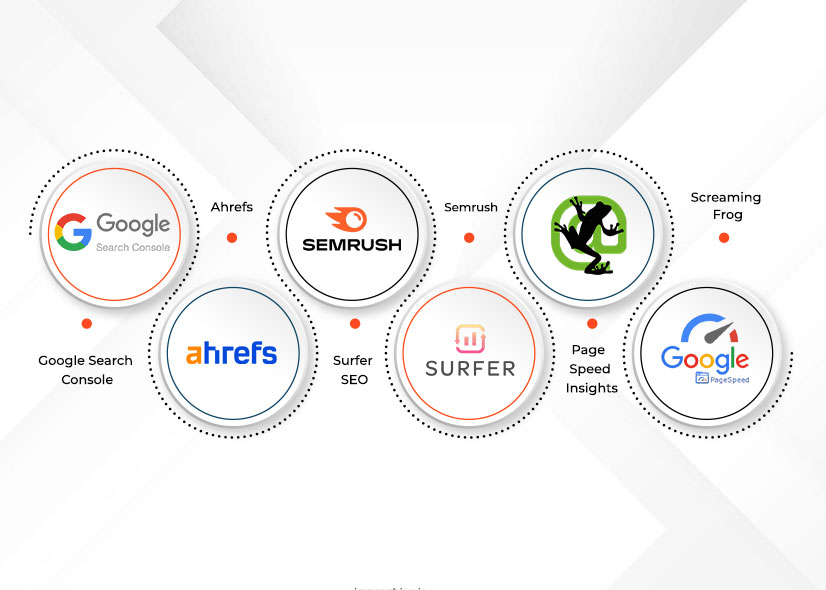
- Google Search Console
- Ahrefs
- SEMrush
- Screaming Frog
- Surfer SEO
- PageSpeed Insights
Final E-commerce SEO Checklist Summary
A successful e-commerce SEO strategy involves much more than adding keywords to product pages. Strong rankings come from combining technical optimization, quality content, good site structure, and a user-friendly shopping experience.
Businesses that consistently invest in SEO often build stronger long-term visibility and reduce reliance on paid advertising.
Start by optimizing your most important pages, improving your website structure, and creating useful content that supports both users and search engines. Over time, these improvements can lead to higher rankings, more organic traffic, and increased online sales. If you want professional support for improving your e-commerce website rankings, work with experienced SEO Toronto Experts. We can help you build a customized SEO strategy tailored to your business goals and long-term growth plans.



