
Do you often find yourself confused when it comes to choosing the right marketing strategy for your business? It’s a common trope everyone faces, especially in today’s world, where a brand’s identity is strongly linked with how you promote it. And when it comes to building your online visibility, there are two top contenders: SEO and PPC. But for small, medium, and startup businesses, it’s equally important to start with one suitable option due to budget constraints.
If you are stuck in the same dilemma, this blog post clears it up by offering you insights into how each strategy works, when they are most effective, and what their drawbacks are. By reading this blog post, you will gain a clearer understanding of which approach aligns best with your business goals in 2026.
What is SEO?
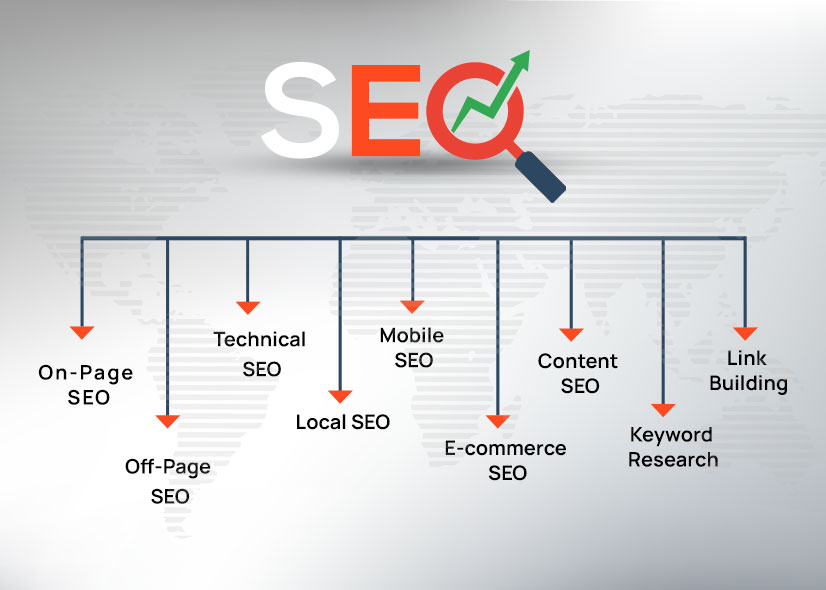
SEO, short for Search Engine Optimization, is the process of improving your website and its content so that it ranks higher on search engines like Google, Bing, and others. By investing in SEO, you boost your chances of showing up every time your prospects make a relevant query on Google.
Types of Searches SEO Helps You Show Up For:
Informational Searches
Many people use search engines when they are trying to learn something new. For example, if someone is interested in learning cloud computing. They might start by Googling something like “how to learn Azure from scratch.” Now, if you are a tutor or run an online training platform, this is your chance to show up for prospects. By creating blog posts or guides on topics around the keyword, you can attract qualified traffic who might end up being your customers. Plus, SEO helps you build trust with potential customers from the start.
Navigational Searches
In this type of search, a user is specifically looking for a website or page. They already know the brand or website they want to visit. But even if people already know your brand, SEO helps you stay at the top of search results, preventing competitors from taking your spot. It also ensures your site is easy to find on all devices, including mobile and voice searches.
Transactional Searches
In this type of search, people are ready to do something like buy a product, sign up, or book a service. For example, a person searching for “buy noise-cancelling headphones online” isn’t just browsing. They have already made a decision and are ready to act. If your site offers that product and is properly optimized, it can show at the top just at the right time.
Commercial Investigation Searches
Before buying, people often like to compare options. These searches come from users who are still doing their homework, looking for the best fit. They might type in something like “best CRM software for small businesses” or “top website builders for ecommerce.” If you have created content that compares tools or services clearly and honestly, SEO can help your site show up during this research phase and potentially guide their final choice.
Local Searches
These are some of the most action-driven searches, like “coffee shop near me” or “emergency plumber in downtown Toronto.” They are not just interested but ready to take action or call someone right away. Local SEO helps your business appear in relevant searches by optimizing your location information, business listings, and content, so you can catch people when they need you most.
The best thing about SEO is that it’s organic. This means people who are genuinely interested in your services, business, or products are the ones who end up on your website. Unlike ads, which can show up to almost anyone unless carefully targeted, SEO brings in traffic that is usually more relevant and engaged.
Another advantage is the trust factor. When your business appears in search results without being marked as sponsored, it gives people the impression that you are credible, experienced, and respected in your field. That kind of perception matters and often influences their decision to reach out or make a purchase.
And above all, SEO is both sustainable and cost-effective. Once you start building momentum, the benefits can last for a long time, even if you take a break. That’s very different from paid ads, where the traffic stops as soon as the budget runs out.
Key Benefits of SEO
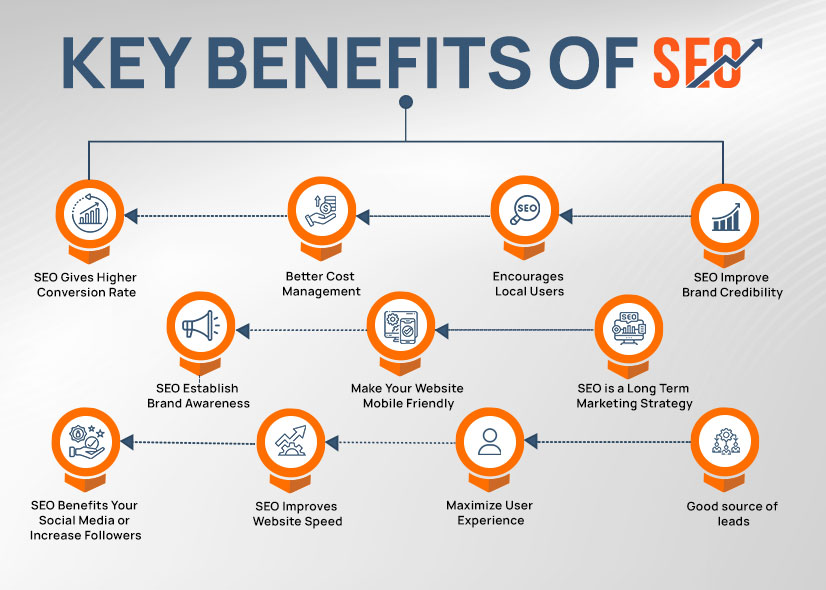
SEO helps you build a strong foundation for your online presence. Here are some other notable benefits:
- With the help of SEO, you can build an intuitive and super smooth user experience. Most of the search engine guidelines and changes in algorithms are aimed at lifting sites with the best user experience up in the search results. And when you have good UX, people are likely to trust you every time they encounter you, because their past experience with you has been positive. That means a high client retention rate, a low bounce rate, and more exposure, with the benefits continuing to multiply.
- Many people believe that SEO is merely about bringing traffic, but that’s half the truth. SEO also focuses on enhancing the usability of your site. Because the key SEO principles suggest eliminating unnecessary elements from the website, which leads to better speed and performance. That means with SEO, you are not just ranking your website and getting traffic, but also boosting the performance and usability of your site while keeping crashes and downtimes at bay.
- SEO comes with a one-time upfront cost, unlike PPC, where you have to pay every time someone clicks on your ad. Moreover, once you establish strong authority, it becomes difficult for your competitors to outrank you, and you keep driving organic traffic without constantly draining your budget.
- Studies show that organic listings, on average, have a higher CTR rate than paid ads. It is a common belief that people trust organic results more than paid ones.
Cons of Choosing SEO
Though SEO has many incredible benefits but carrying out a successful SEO is not so easy; there are plenty of challenges involved. Let’s see what they are:
- SEO is not as fast as PPC. For startups, it may sound like a cost-effective option, but they need to understand the trade-off as well. And that trade-off is that you will need to wait, because it can take months to rank a website. This is a major con of choosing SEO.
- The second common downside to SEO is that search engines keep evolving, which constantly keeps you on the edge. The old tactics that previously might have worked start becoming ineffective. And sometimes, despite aligning with guidelines, you might still get demoted due to algorithmic changes for a month or two.
When is It Ideal to Choose SEO?
Under the following scenarios, it may be ideal to choose SEO:
- If your main goal is to establish long-term authority in your niche.
- If you want to consistently win leads and grow over time.
- When you want to compete in industries where relying on PPC is prohibited.
What is PPC?
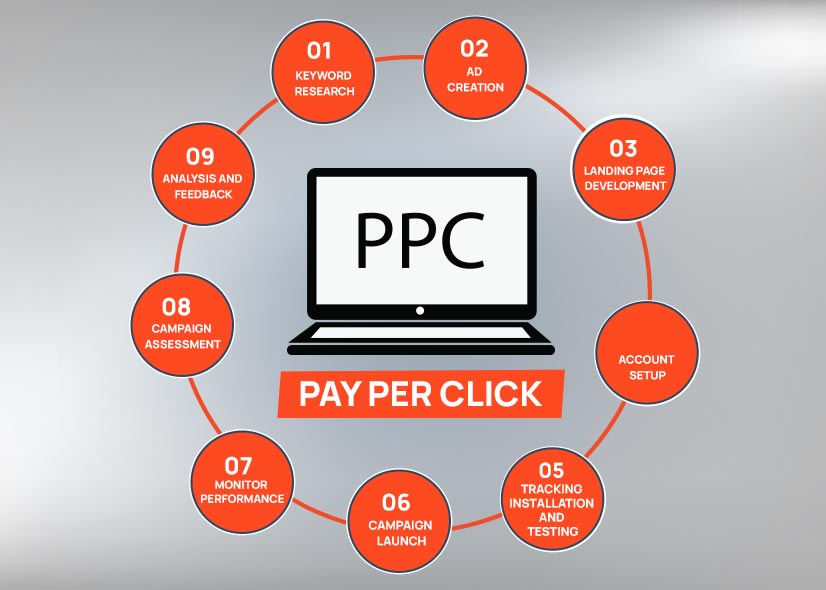
PPC, or Pay-Per-Click, is a digital marketing strategy where you show ads on platforms like Google, LinkedIn, Facebook and others, and every time someone clicks on those ads, you pay a fee to the advertising platform. In simple terms, you are buying visits to your site, rather than getting them organically. The most famous form of PPC is search engine advertising, mainly on Google. In this form of advertising, your ads appear at the top or bottom of the search engine results page when users search for specific keywords. For example, if someone types “buy custom T-shirts online,” your PPC ad can show up instantly if you have targeted that keyword. If they click, you will pay regardless of whether a conversion happens or not.
Is PPC Effective? What Types Of Businesses Choose It And When?
PPC can be highly effective if you do it correctly. It is particularly chosen for its fast results. If you want immediate visibility in search results or social feeds, PPC is your way to go. Businesses that have strong offerings or products are heavily reliant on the PPC model. It is ideal to choose PPC in cases where you know your target audience very well.
Here are some unique prepositions about PPC that make it a strong marketing option for businesses:
- It offers the fastest way to test demand in new markets. If you want to know whether your products perform well in a particular region or niche, you can simply launch a small PPC campaign and get real-time feedback before investing in large-scale rollouts or localizations. That’s a huge benefit.
- The second best thing about PPC is that it reduces marketing waste through precise targeting. It means you can reach your audience by search intent, behaviour, demographics, device, location, and time. This means your ads reach only the most relevant people, unlike many broad-reaching marketing methods.
- PPC offers great insights into what your customers want and how they think. You can use these insights across all your marketing channels.
You have full control over your daily spend. You can start with $10/day and scale to $10,000 when ready. - Many businesses lose clicks (and customers) to competitors running ads on their branded keywords. PPC allows you to defend your space and keep the top position in your own name.
- With the help of PPC, you can retarget visitors who didn’t convert on their first visit.
Key Benefits of PPC
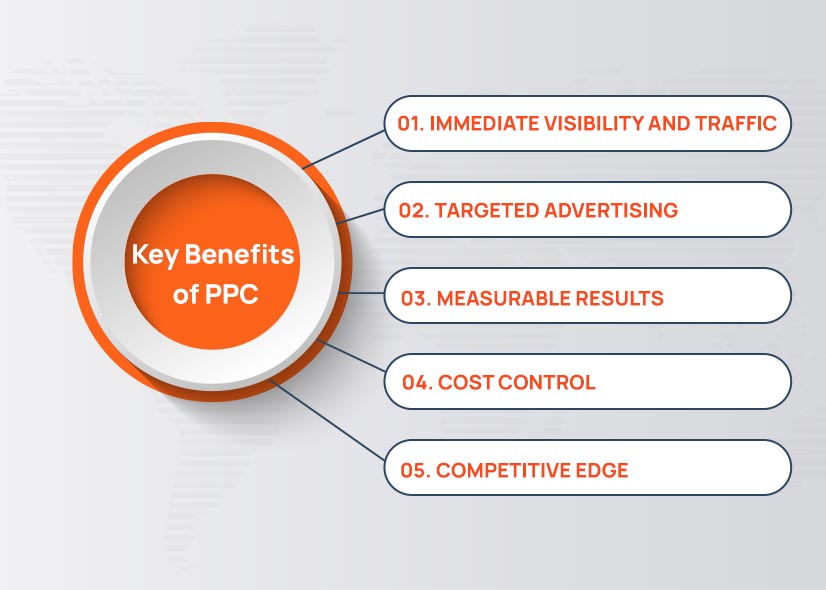
There are a lot of benefits that make PPC a great option for businesses looking to gain online visibility in the fastest way possible. Let’s take a look at them one by one:
- While SEO takes time to show results, PPC can get your business to the top of search results immediately.
- PPC is highly famous for its laser precision. This means your budget is smartly spent on reaching the most relevant prospects, which boosts your conversions.
- PPC is measurable as you can track every click, impression and conversion. Moreover, you can start small and scale up, leveraging the data that tells you whether your campaigning is going successful and generating high ROI or not. You don’t get this level of control in any other marketing model.
Cons of Choosing PPC
Besides the numerous benefits, there are also some challenges with PPC marketing that you need to be aware of:
- PPC is driven entirely by cost. When you stop paying, the traffic disappears immediately, especially if your CPC is high.
- If your cost-per-click (CPC) is high, it can be hard to make a profit without improving your campaign and sales process.
- Keywords in competitive industries are expensive.
- If campaigns are not managed properly, they can deplete your budget.
- You pay for clicks, not for guaranteed sales.
- Users can become desensitized to ads over time, so they might start ignoring them, especially with high exposure.
- Bots and competitors can intentionally click on ads, consuming your budget with invalid traffic.
- The increasing use of ad blockers can prevent ads from being shown to potential customers.
When is It Ideal to Choose PPC?
Here are some cases where using PPC can be beneficial:
- You are launching a new product that needs instant visibility.
- You are competing in a highly competitive market, with organic ranking is difficult.
- You are running limited-time offers and promotions.
- You want to test new markets.
- Your brand has high customer lifetime value.
In a Nutshell
Both PPC and SEO come with their own set of perks and challenges. In this post, we’ve broken down the main differences between the two, like how they work, how long they take to show results, how effective they are, and when to use each one. With all this info, you can get a clearer picture of what’s best for your business, since it really depends on your specific needs and budget.
If you are a startup or a new business, PPC can get you in front of potential customers super quickly. Plus, you will gather data on your customers’ behaviour, which can be super useful for future campaigns, whether it’s SEO or SMM. PPC is also perfect for seasonal promotions if your business relies on sales during events like Black Friday or Cyber Monday. But if you are looking to build long-term success, SEO is the way to go.
Still unsure? We totally get your uncertainties. If both options seem like a good fit or you’re just not sure which one to choose, we can help. We have extensive experience with both organic and paid marketing for a wide range of businesses. We’ll review your needs and, based on the data, recommend the most suitable approach. Book a free consultation with us today!



