

Did you know that enterprise websites face numerous challenges, and the main reason behind it is the site’s extensiveness? In fact, there are literally millions of URLs that must be properly optimized and managed as well.
So, to tackle such a high level of complexity, there needs to be a properly laid out strategy that goes way beyond the traditional SEO practices. The basic idea behind enterprise SEO is to provide better SEO that gets your site a lot more organic traffic and increases conversions and sales as well.
In this insightful blog post, you’ll get to learn about how you can build a scalable enterprise SEO strategy for a large website. So, without any further ado, let’s get started with a step-by-step approach to craft a foolproof enterprise SEO strategy.
12 Steps to Build a Scalable Enterprise SEO Strategy for Your Large Website:-
1. Create Content Hubs

A content hub, which is also known as a topic cluster, is a group of similar types of content which has two different elements:-
- Pillar page: A long-form piece that provides a great amount of information on an extensive topic.
- Supporting pages: These are shorter pages with a lot more details covering particular subtopics of the pillar page.
The pillar page needs to link all of the relevant pages so as to create a content hub.
When you build the right type of content hubs, you will be able to get a substantial amount of topical authority. However, the main component behind it will be thorough topic coverage, which will showcase to Google that your website is the right type of source to get information.
Also Read: Your B2B SEO Strategy Is Broken — Here’s How to Fix It in 2026
2. Focus on Those in Power
You must be aware of the fact that traditional SEO strategies are focused a lot on broad audiences. But, it’s not the case with enterprise SEO as it focuses a lot on the upper management and executives.
The reason behind this is that these people are in charge of the decisions which your SEO strategy is going to support.
When you know this, you’ll be able to customize your content to the sensibilities of the decision-makers. That type of content can focus on:-
- Specific pain points
- Long-term goals
- ROI targets
3. Show Your Business Offering as a Probable Solution
There are many opportunities that you can utilize to let your audience know about your products or services. The best approaches to do the same can be crafting relevant case studies and getting genuine testimonials. However, there’s a different approach that you should take, and that is to double down on product-focused content.
Whatever your business offering might be, you can incorporate it into your content in a natural manner by using distinct content forms such as:-
- Product or service-specific content which is informational.
- How-to guides that can solve relevant problems with the help of your business offering.
- User-generated content, which will highlight the usage of your business solution.
When you combine product-led content with SEO, you should choose commercial keywords which connect with the product’s features.
4. Double Down on Brand Awareness
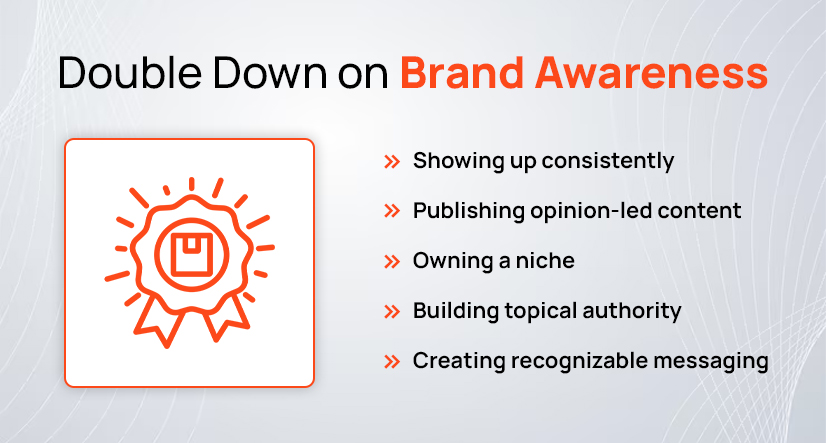
When your website gains traction, your site users will begin looking for it specifically with the help of branded keywords. You can leverage those keywords and target them by crafting authoritative content.
This is surely going to turn this brand awareness into traffic. It will even establish you as a trustworthy source of information.
5. Try to Rank for Your Competitor’s Keywords
Apart from targeting your branded keywords, you also need to rank for competitors’ keywords to get their traffic. In common lingo, it is known as brandjacking. In fact, it is an impactful SEO tactic to get a new audience.
A common approach to target competitors’ keywords is with the help of comparison-based content. But when you’re writing such content, you must be accurate and unbiased.
As a rule of thumb, you shouldn’t show your competitor in a negative light. You can still cover the spaces where they fell short, as per your perspective, but be professional and don’t use negative words.
6. Aim for Popular Branded Terms
When you’ve covered the branded keywords that are associated with your brand and competitors, you need to push beyond. For this purpose, you can focus on long-tail or branded search terms which are related to your business partners.
Focusing on related branded keywords is crucial for SaaS brands and other companies as well. In fact, you can target these keywords with the help of the content types that have been mentioned above.
However, you can also take a different approach, which is to create specific landing pages. One thing you should keep in mind is to give a lot more attention to structured data(schema markup).
When you’ve marked up your content in the correct manner, you will make it easier for Google to pick your website over your competitors’.
7. Use Original Research Backed by Data
Enterprise businesses have many resources which can be utilized to carry out thorough industry research and generate unique insights. These insights can be a part of your enterprise SEO efforts as they can provide amazing value to your audience. It will even establish you as an authority in your industry.
This data-driven content will help you get so many backlinks and media mentions as well. It will surely impact your SEO standing on the search engines.
When you’re publishing your case studies or reports, you should definitely go beyond the charts and figures to include actionable insights.
8. Focus on Product-led SEO
Product-led SEO will go a lot ahead of the content, which will show your product’s capabilities. You should also go a step further and craft SEO-friendly tools associated with your business offerings.
Alongside this, you need to ensure that these tools are indexable and useful as well, so as to get clicks and shares.
They can even target evergreen informational keywords, which will ensure that each page is sustainable as a long-term option. If you want to get the most out of your freebies, you can embed CTAs or lead capture forms to drive users further down the marketing funnel.
9. Pay a Good Amount for Online PR
In traditional PR, the main focus is on brand awareness and media exposure as well. But digital PR has a much broader focus. The main focus of digital PR is to boost online engagement, get qualified traffic, and even manage the online reputation of a business.
This process is carried out with the help of digital PR campaigns, which will attract good-quality links from reputable sources such as media and news outlets.
Apart from publishing content that attracts links in a passive manner, you can even follow a direct approach by getting involved in distinct media initiatives.
You need to think about what will draw the most level of attention to your brand, but you should ensure that this attention is quite positive.
10. Showcase Your Expertise With EEAT
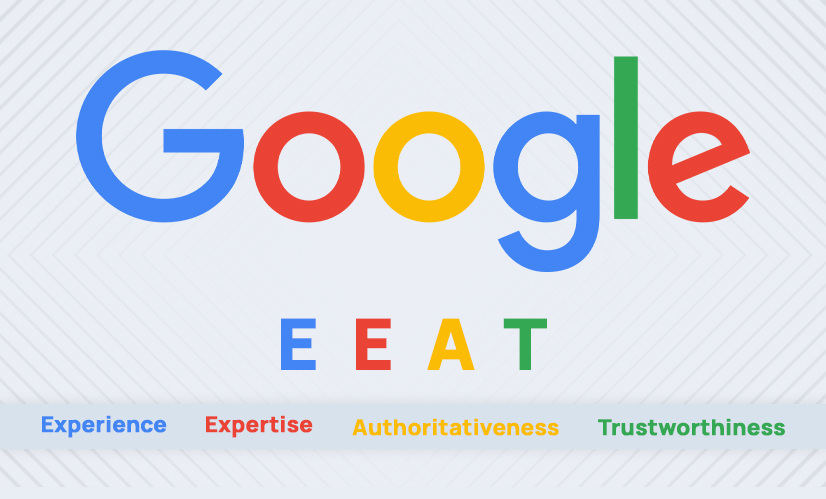
EEAT basically means Experience, Expertise, Authoritativeness, and Trustworthiness. These are the elements that Google wants to see on your website, and only then will it give your site the coveted top rank in search results.
The best part about these elements is that the first three will naturally build trust. However, these elements must be showcased in the right manner throughout the website.
11. Trust the Partnership of Content Marketing & SEO
You need to understand that SEO isn’t a one-off thing, and it must be properly integrated into the bigger digital marketing strategy. It can include things such as:-
- Content marketing
- Email marketing
- PR campaigns
- Paid advertisements
A properly laid out content marketing strategy will make a significant mark because there are many SEO signals which will be gauged through quality content. You can aim to craft unique and clickable content, which will satisfy all of the essential SEO signals.
Other than the blog post content and informational pieces, you can try to engage your audience with the help of announcements and product insights.
12. Attract Your Target Audience With a Newsletter
Google prefers websites that people keep returning to. If you want this to happen to your website, you can utilize a regular newsletter. This will keep your audience quite engaged with your brand and improve the loyalty factor as well. It will help in maintaining and even growing the website traffic.
The best channels that you can utilize for a newsletter are your website’s blog and email. In an ideal scenario, you should combine both of them, as the audience that doesn’t visit your site will get notified of updates through your email.
Also Read: What Are Topic Clusters and How Do They Improve Your SEO Strategy in 2025?
Build a Highly Scalable Enterprise SEO Strategy for Your Website
Looking to get a customized enterprise SEO strategy that can grow your website and business as well? If your answer is in the affirmative, SEO Toronto Experts will prove to be a game-changer for your brand.
Our SEO experts have helped many clients by growing their enterprise’s website on the search engine results page(SERP), and we’ll do so for you. Get in touch with us now with your enterprise SEO requirements, and let’s craft a winning strategy for your brand’s website.



