

Do you know that almost 70% of online sales begin on a search engine? That’s more of the reason why carrying out the right type of SEO is so important for e-commerce business websites.
However, for Magento 2 store owners, it clearly means that utilizing SEO is not just advantageous but a necessity for surviving the competition in their e-commerce niche.
So, to help you out, we’ve crafted an in-depth guide on the Magento SEO checklist. Following this checklist will ensure that your store’s visibility gets a good amount of growth, along with driving plenty of organic traffic and increasing your conversion rates. So, let’s get going without any further delay.
What is the Meaning of Magento SEO, and What is Its Importance?
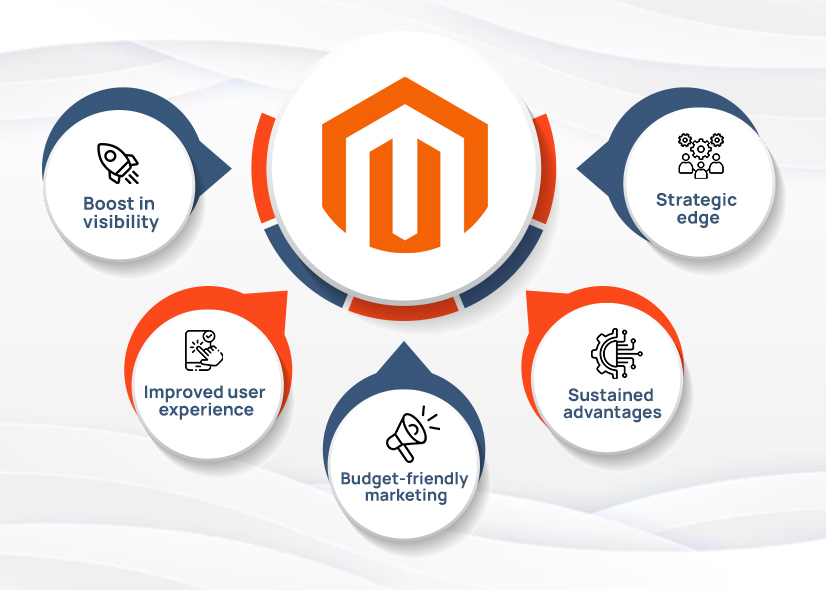
Boost in visibility: Your e-commerce store will have much better rankings in the SERP, signifying that your site is a lot more visible to prospective customers. This is bound to take the sales of your products and services to the next level, along with the organic traffic.
Improved user experience: SEO tactics that will align with boosting the overall user experience of your site. It includes factors like swift page load times and impeccable navigation as well. It is bound to lead to an increase in conversion rate and customer satisfaction.
Budget-friendly marketing: Paid advertising can be quite impactful, but it’s also expensive, and this holds true for the most competitive keywords. SEO will provide you with a budget-friendly approach to get targeted traffic to your digital store. It can be done by optimizing for the right keywords that prospective customers are utilizing in their searches.
Sustained advantages: The impact of SEO will last for a long time to come and will also provide several advantages for your digital store over a considerable amount of time. When your website gets higher rankings, you will be able to maintain those positions for a considerable amount of time. It’s just that you need to follow the proven SEO methods and try to keep your content quite relevant and as per the latest trends.
Strategic edge: The e-commerce world is very competitive, and opting for the right type of SEO strategy will give your online store an amazing advantage. In fact, you will get far ahead of your competitors who haven’t optimized their websites in the right manner.
Also Read: Is SEO Dead in 2025? Debunking the Myths & Impact of AI!
On-Page SEO Checklist for Magento
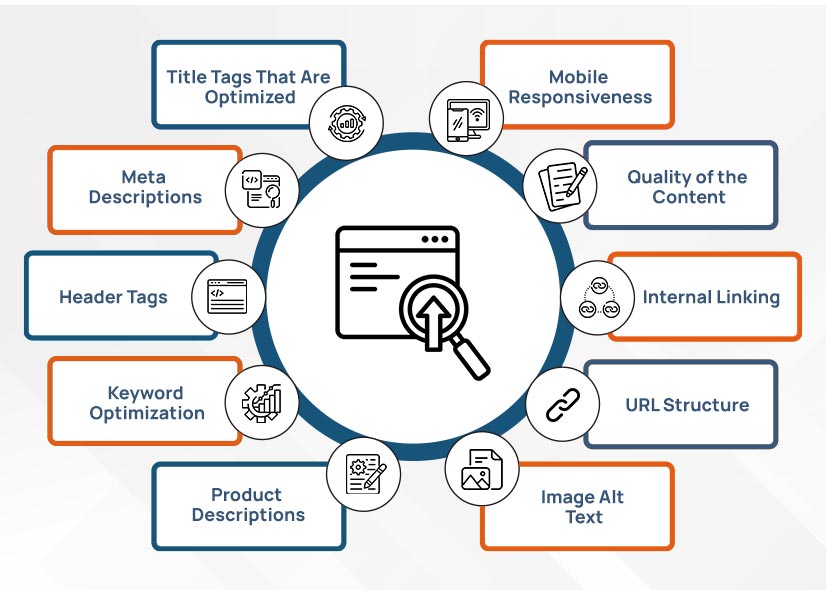
On-page SEO is the process of optimizing particular web pages to rank higher and get the right type of traffic in search engines. As a matter of fact, for Magento 2 stores, optimizing for on-page factors is important to boost the visibility and generate sales.
Checklist for on-page SEO and how you can implement it:-
Title Tags That Are Optimized
You need to ensure that each page on your Magento 2 website has a unique title tag, which will consist of your main keyword. The title tag must be concise and not more than 60 characters, along with being descriptive. You can use the backend of Magento 2 to customize the title tags for every page, product, and even category.
Meta Descriptions
Each web page needs to have a unique meta description, which will influence the users to click on the website link in the SERP. However, keep the meta description under 160 characters and incorporate the right type of keywords. In Magento 2, you will be able to edit the meta descriptions under the SEO settings of pages, products, and categories.
Header Tags
When you use the header tags appropriately, it will help in organizing content on your web page. It will also make it a whole lot easier for the search engines to know about the hierarchy and importance of your content. You need to ensure that your primary keyword is in the H1 tag and utilizes the right types of headers to give a proper structure to the content. Magento 2 will even allow for editing the HTML of pages, in which you can insert the header tags in a direct manner.
Keyword Optimization
You should research and find out the primary and secondary keywords for every webpage. You can include these keywords in a natural way in your page titles, headers, content, and even meta descriptions. Tools such as Google Keyword Planner can be quite helpful for you in doing keyword research. Alongside this, you need to ensure that you don’t overstuff the content with unnecessary keywords and try to have a natural flow.
Product Descriptions
Craft relevant and unique product descriptions for every item you sell and include the right keywords in them. You must avoid the descriptions provided by the manufacturer to ensure that there aren’t any duplicate content issues. You can edit and even optimize the product information through Magento 2’s product information section.
Image Alt Text
Every image on your website must have descriptive alt text with the right type and amount of keywords. It will improve the accessibility and even assist the search engines in knowing about the content of the website’s images. In fact, in Magento 2, you will be able to add alt text directly in the product images, which is present in the SEO settings.
URL Structure
You should use clear and descriptive URLs that include the right keywords for your web pages. Furthermore, avoid long URLs and make sure that they are easy to read for not just the users but the search engines as well. Magento 2 will allow you to customize the URL keys for not just the products but categories as well in the SEO settings.
Internal Linking
You can create links between pages on your website to help the search engines crawl your website in a much more effective manner. In fact, this is bound to improve the page authority significantly. Using descriptive anchor text will surely give an indication of the linked page’s content. Furthermore, you should also review your website content regularly to find the right opportunities for internal linking.
Quality of the Content
Try to create supreme quality and highly relevant content that will address the requirements of your audience. By using tools such as Google Analytics, you will be able to understand what your audience wants and even update the content as per their needs. Alongside this, don’t forget to regularly update your blog, product pages, and even category pages by using fresh content.
Mobile Responsiveness
To satisfy the requirement of mobile-first indexing, you need to ensure that your Magento 2 website is properly mobile-friendly. You can use Google’s Mobile-Friendly Test tool to find out the mobile-responsiveness of your website. The Magento 2 themes are quite responsive. But it would be good if you could test your website on different devices, along with browsers, to test for optimum performance.
Page Load Speed
The loading speed of the website is an important factor for not just SEO but the user experience as well. You can use tools such as Google PageSpeed Insights to judge the performance of your website and carry out the provided recommendations. In Magento 2, carrying out image optimization, using browser caching, and minimizing JavaScript and CSS files can substantially improve load times.
Also Read: WWW vs Non-WWW: Which is Right from SEO Perspective
Magento off-page SEO Checklist
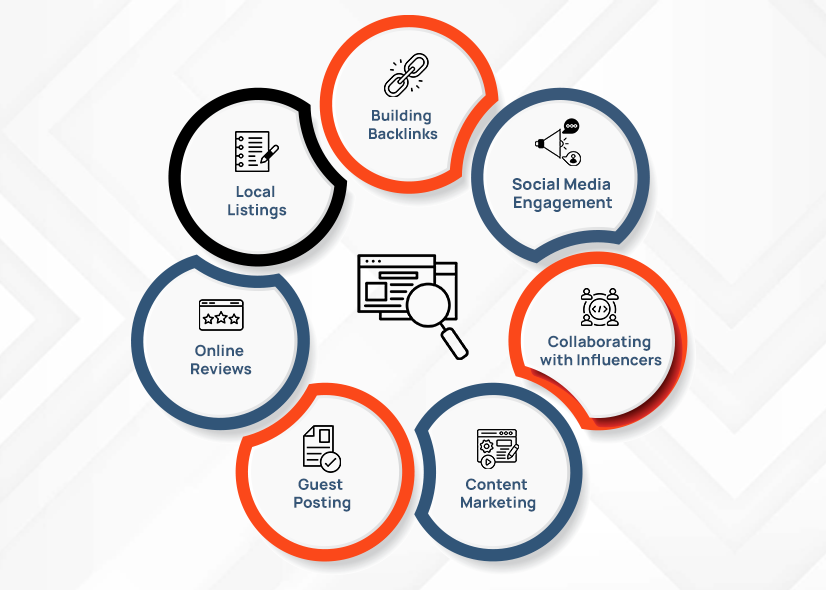
Building Backlinks
Fetching high-quality backlinks from good websites is the foundation of off-page SEO. It will signal to search engines that your content is valuable and authoritative for other websites. For this purpose, you should create good-quality and shareable content on your store so as to provide a substantial amount of value to your audience. You can also reach out to industry bloggers and influencers, offering your high-quality content. Moreover, take part in relevant forums and online communities. In this way, you can contribute with your insights and incorporate links back to your content.
Social Media Engagement
Social media marketing won’t help you with your website’s rankings in a direct manner. However, it will improve the visibility and traffic to your website, which will give a significant boost to your SEO work. On your social media profiles, you can share new products and relevant content to engage your audience. You can even encourage your followers to share your content by including social sharing buttons on your product pages and even blog posts.
Collaborating with Influencers
When you collaborate with influencers, it’ll drive traffic and improve your brand’s visibility and even help you get valuable backlinks to your Magento 2 store. For this purpose, you should identify the right influencers with an engaged audience. You can even reach out to the influencers with a proposal for collaboration, like sponsored content and product reviews. By working together, you can create content that will include backlinks to your Magento 2 store, and it will be a win-win situation for both parties.
Content Marketing
Do you know that you can share engaging and informative content beyond your site and get many benefits? This approach will attract backlinks and even ensure that your brand is seen as an authority in your niche. You can craft a proper content marketing strategy, which may include blogs, infographics, and videos as per your target audience. Alongside this, you should focus on distributing your content across different platforms. Some relevant examples are industry blogs, news sites, etc. Lastly, you should leverage social media and email marketing to promote your content in the right manner.
Guest Posting
Are you aware of the fact that writing amazing articles as per your niche is bound to introduce your brand to new prospects and help you get valuable backlinks? However, if you’re serious about doing it, you can identify blogs and websites in your industry that are willing to accept guest posts. You can even find topics which are relevant to your target audience and provide a great amount of value. Try to include a bio that has a link back to the Magento 2 store and include the right type of links within the content.
Online Reviews
Good reviews on third-party websites can improve the credibility of your business and can even persuade prospective customers. You can encourage the delighted customers to give positive reviews on platforms such as Google My Business and industry-specific review websites. Alongside this, you must also reply to all of the reviews in a professional manner. It includes thanking the customers for their positive feedback and addressing the issues highlighted in the negative reviews. Furthermore, highlighting the testimonials on your Magento 2 website will build a good amount of trust among prospects.
Local Listings
In case you have brick-and-mortar stores, doubling down on local SEO will drive a great amount of online and in-store traffic. For this purpose, you should claim your business listing on Google My Business and make sure that this information is not just accurate but quite detailed as well. Moreover, submit the business information to local directories. Also, don’t forget to ensure that your name, address, and phone number(NAP) are uniform across all of the listings to improve your local SEO efforts.
Also Read: Canonical Issues In SEO: How To Find & Fix Them
Magento Technical SEO Checklist
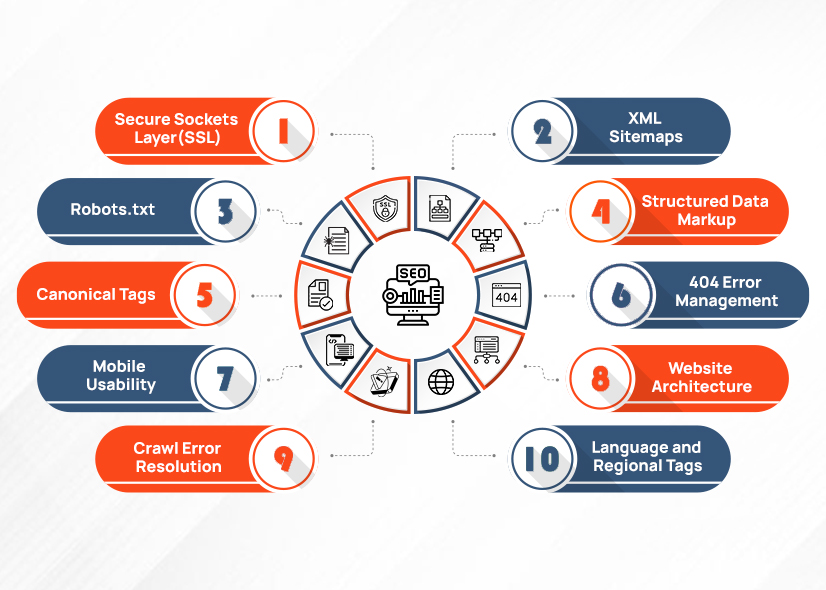
Technical SEO is focused a lot on boosting the technical elements of your site so as to help the search engine bots crawl and index your website. It can lead to much better SERP rankings.
Here’s a thorough checklist for technical SEO specifically for Magento 2 stores:-
Secure Sockets Layer(SSL)
SSL encrypts the data that gets exchanged between the Magento 2 stores and the visitors. This mechanism secures the personal information of the visitors. It is also an important ranking factor for Google. You can purchase an SSL certificate from a reliable authority. Then, you can install and configure the SSL certificate on your web hosting account.
XML Sitemaps
An XML sitemap will help the search engines to comprehend the structure of the website, along with discovering new webpages. You can submit the sitemap to search engines with the help of webmaster tools such as Google Search Console.
Robots.txt
The robots.txt file will tell the search engine bots regarding the pages or website sections that must be crawled and the ones that need to be ignored. You must ensure that you aren’t disallowing search engines from crawling crucial content. Furthermore, you can even consider disallowing the pages that hold less value when it comes to search engine indexing.
Structured Data Markup
Structured data will help the search engines to know about your website’s content and even improve the listings in search results. To do this, you can utilize a tool such as Google’s Structured Data Markup Helper, which will help you generate the right type of HTML. You can even add the structured data to the Magento 2 pages in a manual way or with the help of extensions. These extensions will automate schema markup for all types of content.
Canonical Tags
Canonical tags are known to prevent problems that happen because of duplicate content, which might appear on different URLs. In fact, Magento 2 will automatically generate canonical tags for various products and categories.
404 Error Management
Do you know that managing 404 errors can improve user experience and even help in maintaining the link equity, which otherwise might have been lost? So, you must regularly monitor your website for 404 errors with the help of tools such as Google Search Console.
Mobile Usability
Because of Google’s mobile-first indexing, your site needs to be mobile-friendly if you want to rank it on the SERP. You can opt for a mobile-responsive Magento theme, which will adapt its layout as per the distinct screen sizes. Furthermore, don’t forget to test your website’s mobile usability with Google’s Mobile-Friendly Test Tool and take care of the issues that arise.
Website Architecture
A properly organized website structure will improve the crawlability and even improve the user experience. So, you must organize your content into proper categories and subcategories. Also, utilize Magento’s category management options to structure the products in a way that is easy for not just users but search engines as well.
Crawl Error Resolution
Fixing the crawl errors will ensure that search engines are able to index your website in an effective manner and improve your rankings as well. For this purpose, you can use Google Search Console to identify and even fix crawl errors. You should also address the errors by resolving the broken link issues and including redirects, along with improving the website’s navigation.
Language and Regional Tags
If you have a multi-language or multi-regional Magento store, you can use the hreflang tags. It will help the search engines to provide the right version of your content to users according to the language. Moreover, you can also implement hrefland tags in the website’s HTML or sitemap, which will indicate different language versions of a particular page.
AI SEO Checklist
Automated Semantic Metadata Generation
Writing meta titles and descriptions for thousands of products is almost impossible in a manual manner. That’s more of the reason why you need to use AI extensions, which will integrate with LLMs and help you in analyzing different product attributes. It won’t be like the traditional template-specific approaches, as AI will ensure that every description is semantically varied, and it will prevent the issue of duplicate content.
AI-Powered Image Alt-Text
Visual search is one of the most important parts of e-commerce sales. So, you need to utilize AI vision tools to automatically scan the Magento media gallery and even generate descriptive ALT-text according to the actual visual elements of the product. If you think beyond accessibility, these tools will also automate the conversion of heavy assets, helping you meet the Core Web Vitals requirements for speed.
Dynamic Internal Linking
Internal linking is crucial for distributing the link equity across all of the Magento category and product pages. So, rather than using static-related product blocks, you can use AI-driven cross-linking tools. It can analyze the site structure and user behaviour to find out the most relevant links. With the help of a logical architecture, AI will help the search engine crawlers to discover new content in a quick manner.
Predictive Keyword Research
You must stop relying only on the historical search volume and instead use AI platforms to predict the upcoming trends and niche-specific queries. These tools will be able to analyze the Magento site search data to know what customers are looking for but cannot find. By mapping these AI-identified content gaps, you will be able to capture high-intent traffic before your competitors do.
AI-Driven Structured Data
Magento stores find it really difficult to keep Schema Markup updates across different product variations. That’s why you should use AI to automate the implementation of structured data. These tools will be able to pull real-time data from your Magento store’s backend and ensure that the snippets are always right in Google’s search results.
Wrapping Up
In 2026, you need to focus equally on on-page, off-page, technical, and even AI SEO elements to get the best results for your Magento store.
However, the foundation needs to be a quick and mobile-specific architecture, along with leveraging automation. Nowadays, the search landscape has shifted towards generative experiences and fulfilling the search intent requirements of your target audience is crucial. So, follow this checklist and future-proof your Magento store.
Looking to get the best Magento SEO services? If your answer is in the affirmative, SEO Toronto Experts will be your partner in getting SERP success. Get in touch with us now and let’s discuss your Magento SEO requirements.



