
A SaaS founder can spend nearly $40,000 on SEO, but still not get leads. The traffic might increase, and blog posts might rank, but leads? Almost dead.
And that’s the part most B2B companies don’t see coming. You can publish content every week, hire expensive agencies, and still end up talking to the wrong people.
The problem usually isn’t effort. It’s a strategy.
A lot of B2B SEO plans still run on old habits from 2021 or 2022. Chasing traffic numbers. Stuffing blogs with keywords. Writing content that sounds smart but doesn’t help anyone make a decision. Meanwhile, buyers have changed. Search behavior has changed. Even Google’s expectations have changed.
So if your SEO feels busy but your pipeline feels quiet, something’s probably broken. The good news? It’s fixable once you know where the cracks are hiding.
How to Tell if Your B2B SEO Strategy Is Broken
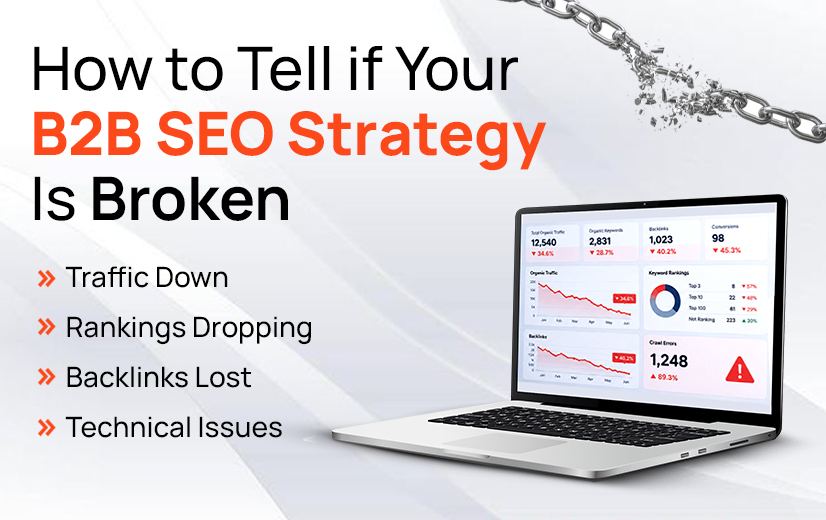
You’re Getting Traffic But No Leads
A cybersecurity company ranks for “What is ransomware?” Great keyword. Huge traffic potential.
But the people reading that article are usually students, casual researchers, or small businesses looking for free advice. They’re not necessarily buyers looking for enterprise security software.
That’s where many B2B SEO strategies fall apart. They chase volume instead of intent.
You don’t need more random clicks. You need the right people landing on the right pages at the right time. Big difference.
And honestly, what’s the point of 100,000 visitors if none of them book a demo?
Signs this is happening:
- High organic traffic but low conversions
- Visitors leave after reading one page
- Demo requests stay flat month after month
- Sales teams complain about poor lead quality
Your Content Sounds Like Everyone Else
You’ve probably seen these headlines before:
- “Top Benefits of Cloud Migration”
- “Why Digital Transformation Matters”
- “The Ultimate Guide to CRM Software”
The internet is flooded with this stuff. Most of it says the exact same thing in slightly different words.
Buyers notice that.
If your content could be copied, pasted, and swapped with a competitor’s logo without changing meaning, it’s forgettable. And forgettable content rarely drives trust. People don’t just want information anymore. They want perspective.
Here’s what stronger B2B content looks like:
- Real examples from actual client situations
- Strong opinions backed by experience
- Specific numbers and outcomes
- Clear answers instead of fluffy explanations
Instead of saying:
“Automation improves efficiency.”
Say:
“One logistics company cut manual reporting time from 11 hours a week to under 2.”
That feels real because it is.
You’re Ignoring Bottom-of-Funnel Searches
Some B2B brands spend all their energy writing educational content. That helps visibility, sure. But buyers closer to a decision search differently.
They type things like:
- “Best ERP software for manufacturers”
- “HubSpot vs Salesforce for B2B”
- “Enterprise payroll software pricing”
- “SOC 2 compliance tools reviews”
These searches may get less traffic, but they usually convert better because the intent is stronger. But many companies avoid these topics because they think comparison keywords are “too competitive” or “too salesy.” That hesitation costs leads.
When someone compares solutions, they’re already thinking about buying. You want to be part of that conversation.
Is B2B SEO Still Worth It in 2026?
Yes. But not in the way most teams are currently doing it.
The conversation around AI Overviews, ChatGPT, and zero-click searches is real, but it is valid, but many companies are applying those concerns too broadly. Is search changing? Absolutely. Does that mean B2B SEO is no longer worth investing in? Not even close.
What is actually happening is a split. Generic, surface-level content is getting swallowed by AI summaries and losing clicks fast. But an authoritative, specific, deeply researched B2B content strategy is compounding. It is getting cited, linked to, and trusted more than ever because there is less of it.
B2B buyers still rely heavily on search during the research phase. They are reading comparison pages, looking up vendor reviews, and searching for proof that a solution actually works before they ever agree to a demo. The trust signals have shifted, but the behavior has not disappeared.
The companies treating SEO as a traffic game are losing. The ones treating it as a trust-building channel are winning.
What AI Overviews Actually Changed for B2B
AI Overviews are mostly eating up informational queries. The “what is” and “how does” questions are at the very top of the funnel. That traffic was never converting into a pipeline anyway.
What they are not touching nearly as much are mid-funnel and bottom-funnel searches. Comparison queries, vendor shortlists, solution-specific searches, pricing pages. Those still drive clicks because the buyer needs to actually go somewhere and evaluate something.
Gartner research consistently shows that B2B buyers spend a significant portion of their purchase journey doing independent online research before ever speaking to a sales rep. SEO is still a major part of how they do that research. The implication is straightforward: stop pouring energy into top-of-funnel content that AI will summarize away, and invest harder in the content that sits closer to a buying decision.
The Real Threat Is Mediocrity, Not AI
If your B2B SEO is underperforming right now, AI is probably not the reason. The more likely reason is that the content is thin, the intent matching is off, and there is no real topical depth to build authority on.
A company with 300 blog posts that each skim the surface of a topic will lose to a company with 40 tightly focused, genuinely useful pieces. Every time. Google has gotten very good at knowing the difference between content that exists to rank and content that exists to help someone.
The bar is higher now. That is actually good news if you are willing to clear it, because most of your competitors are not.
Why Old B2B SEO Tactics Don’t Work Anymore
Google Cares More About Experience Now
A few years ago, you could rank with decent B2B keyword research, optimization, and enough backlinks. Not anymore.
Google has become much better at identifying thin content created only for rankings. And users have gotten less patient with generic advice. If your article sounds vague, over-optimized, or overly polished in a fake way, people bounce fast. Google notices that behavior.
That’s why firsthand experience matters more in 2026. You don’t need to sound academic. You need to sound believable.
Example:
A finance software company writing:
“Financial visibility is important for growth.”
Feels empty.
But saying:
“Most CFOs don’t realize how messy their reporting process is until quarter-end turns into a 12-tab spreadsheet nightmare.”
That hits differently because it reflects an actual problem.
AI Content Flooded Search Results
Here’s the uncomfortable truth: thousands of B2B companies are publishing AI-written content every day. And most of it sounds exactly the same. Generic intros. Predictable advice. Zero personality. No original thinking. Buyers skim it and forget it instantly.
But the bigger issue is trust. Decision-makers don’t want content that feels manufactured. They want signs that someone understands their world.
That doesn’t mean AI is bad. It just means lazy content is easier to spot now.
The companies winning organic search in 2026 are blending SEO with genuine expertise. They sound human because they’re adding real insight, not just rearranging information already online.
Search Intent Changed Faster Than Most Teams Realized
People search differently now because they expect faster answers. A procurement manager doesn’t want to read 3,000 words before learning pricing models. A founder comparing CRM tools doesn’t care about the “history of customer relationships.”
They want clarity. Fast.
And if your content takes too long to answer basic questions, they leave. That means your content should:
- Get to the point quickly
- Use simple language
- Answer objections directly
- Help buyers make decisions faster
Complicated writing doesn’t make you sound smarter. It usually just creates friction.
How to Fix Your B2B SEO Strategy in 2026
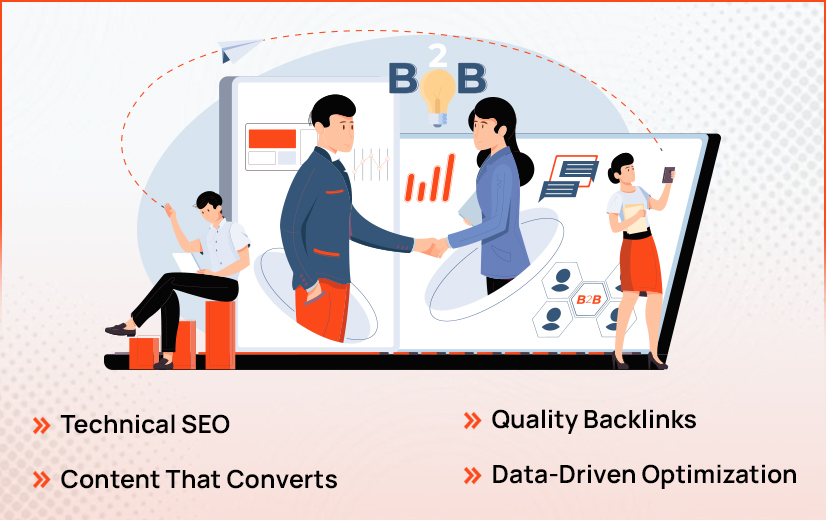
Start With Revenue, Not Traffic
This changes everything.
Instead of asking:
“How do we get more traffic?”
Ask:
“What searches bring qualified buyers?”
That shift helps you focus on intent-driven content instead of vanity metrics.
For example:
A company selling HR software shouldn’t obsess over broad terms like “employee engagement.” They should target searches tied to buying behavior:
- “HR software for remote teams”
- “Best onboarding platforms for startups”
- “Payroll software with compliance features”
Less traffic sometimes produces better business results. And honestly, that’s the metric your leadership team actually cares about.
Build Content Around Real Customer Questions
Your sales calls are full of SEO ideas. Seriously. Every objection, concern, pricing question, or feature comparison can become high-converting content. But many marketing teams ignore this goldmine because they’re stuck using B2B keyword research tools alone.
Start listening for questions like:
“How long does implantation take?”
“What makes you different from competitors?”
“Will this integrate with our current tools?”
“Is this scalable for enterprise teams?”
Those questions signal buying intent. When your content answers them clearly, you shorten the trust-building process before a sales call even happens.
Stop Writing for Algorithms First
Keywords matter. Structure matters. Technical SEO for B2B matters too.
But if your content feels robotic, readers won’t stick around long enough for rankings to matter. Write like you’re explaining something to one smart person over coffee. Use shorter sentences when needed. Add specific examples. Say things plainly. And don’t be afraid to sound conversational.
For example,
Instead of saying:
“Organizations leveraging integrated workflow ecosystems experience operational optimization.”
Just say:
“Teams work faster when their tools actually connect properly.”
Cleaner. Easier. More human.
Update Old Content Instead of Constantly Publishing New Posts
A lot of companies treat SEO like a content factory. Publish more. Publish faster. Repeat.
But outdated articles quietly kill performance over time. One old post with stale information can damage trust faster than you think.
Here’s a better approach:
- Refresh statistics
- Add recent examples
- Improve internal linking
- Rewrite weak introductions
- Remove filler sections
- Add expert quotes or opinions
Sometimes updating five strong articles beats publishing twenty forgettable ones.
Quality compounds over time. Thin content usually doesn’t.
The SEO Metrics That Actually Matter Now
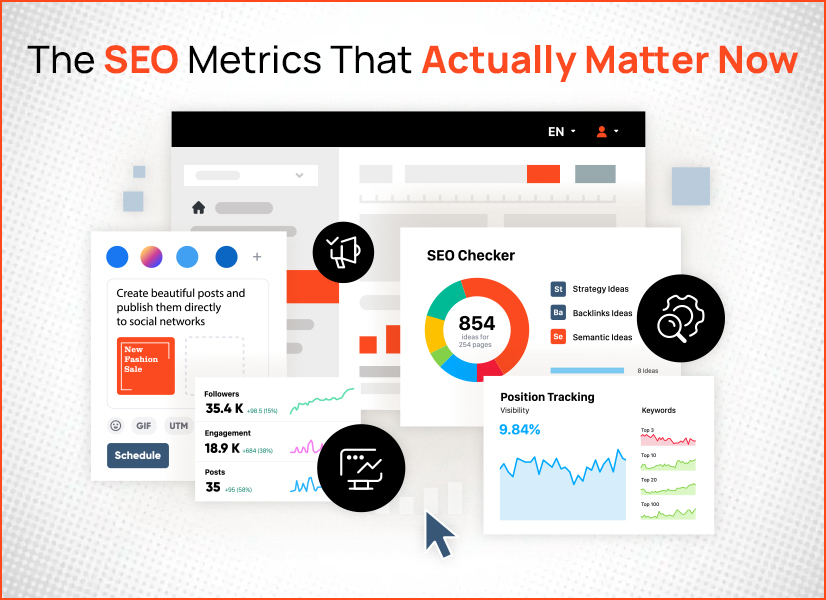
Pipeline Influence
Traffic is easy to inflate. Revenue is harder to fake.
You should know:
Which pages influence demos
Which keywords lead to sales conversations
Which content assists conversions later in the funnel
Because not every page exists to rank. Some exist to build trust before the buyer reaches out.
That distinction matters.
Engagement Signals
If people land on your page and leave immediately, something’s off.
Watch for:
- Time on page
- Scroll depth
- Return visitors
- Branded search growth
- Assisted conversions
These signals tell you whether content is genuinely helping people or just attracting accidental clicks. And in B2B SEO, engagement usually predicts future conversions better than raw traffic spikes.
Sales Team Feedback
This one gets ignored constantly. Ask your sales team:
- Which leads feel informed already?
- Which blog posts prospects mention?
- What objections keep repeating?
- Where do buyers get confused?
SEO shouldn’t operate separately from sales. The strongest B2B strategies connect both sides tightly. Because if content attracts traffic but creates bad-fit leads, sales suffer too.
The Biggest SEO Mistake B2B Brands Still Make
They Try to Sound “Professional” Instead of Helpful
There’s this strange belief in B2B marketing that sounding complicated makes a company look credible. Usually, it does the opposite. Buyers are busy. They don’t want corporate jargon packed into every sentence. They want clarity.
And clarity builds trust faster than polished buzzwords ever will.
Compare these two lines:
“Our integrated synergy-driven platform enables scalable operational excellence.”
Now compare it to:
“Your team can manage projects, approvals, and reporting in one place instead of juggling six tools.”
Which one actually helps you understand the product?
Exactly.
What Winning B2B SEO 2026 Looks Like
The companies pulling ahead right now aren’t necessarily publishing the most content.
They’re publishing the most useful content. They answer hard questions openly. They show real expertise. They sound like people instead of polished brochures.
And they understand something many brands still miss:
SEO isn’t just about rankings anymore. It’s about trust before the first conversation even happens. That changes how you write. What you prioritize. Even how you measure success.
Because when your SEO strategy actually matches buyer behavior, organic traffic stops being a vanity metric and starts becoming a revenue channel.
So when was the last time you looked at your SEO strategy and asked whether it’s attracting visitors… or future customers?
If your B2B SEO strategy is bringing traffic but not real business growth, it’s time for a smarter approach. Visit SEO Toronto Experts and see how data-driven SEO can turn clicks into qualified leads.



